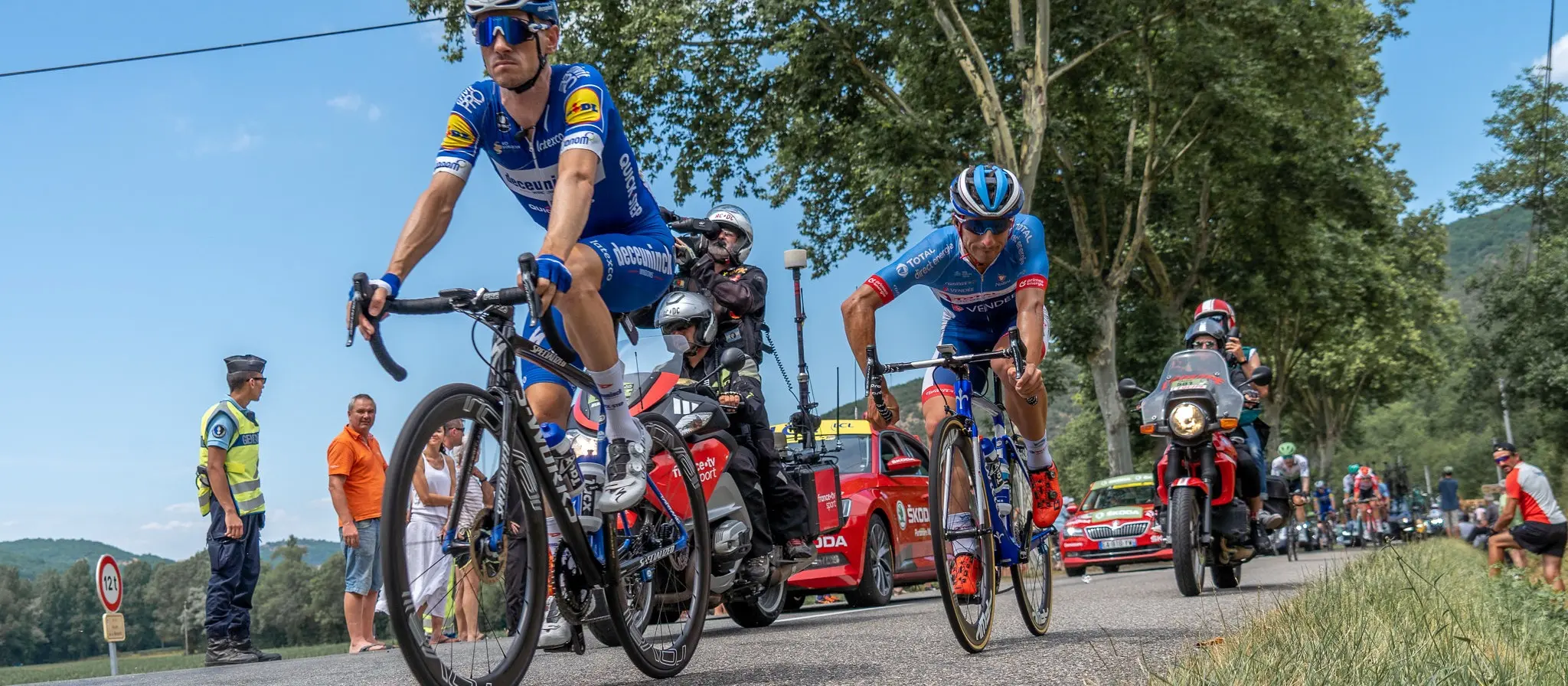
Three days. Three stages. And a city that has rerouted itself around the world's most famous bike race. If you're in Barcelona from July 4–6, 2026, here's what you need to know before you step outside.
In 30 seconds
- Stage 1 (July 4): team time trial through Barcelona — road closures from Parc del Fòrum, seafront, Sagrada Família, Plaça d'Espanya to Montjuïc
- Stage 2 (July 5): finish on Montjuïc — expect heavy crowds from late afternoon; L2 and L3 metro lines are your best options
- Metro and buses keep running — but surface bus routes near the race route will be diverted
What's actually happening in Barcelona
The 2026 Tour de France opens with le Grand Départ on Saturday, July 4 — a 19.7-kilometre team time trial through Barcelona, the first TTT opening stage in over 50 years. The route starts at Parc del Fòrum on the northern waterfront, sweeps along the seafront to Port Olímpic, cuts through the city past the Sagrada Família, crosses Plaça d'Espanya, and climbs to the finish on Montjuïc.
Stage 2 on July 5 runs 178 kilometres from Tarragona back to Barcelona, again finishing on Montjuïc. Stage 3 on July 6 departs from Granollers — outside the city — heading toward the Pyrenees and France.
In practice: July 4 and 5 are the days the city changes. July 6, Barcelona is back to normal.
Which areas are closed to traffic
Road restrictions will affect the seafront, Sagrada Família, and Montjuïc on July 4 and 5. These are three of the busiest tourist corridors in the city — and all three will have secured perimeters during race hours.
What this means for you:
- Seafront (Barceloneta to Parc del Fòrum): surface bus routes will be diverted, especially lines running along Passeig Marítim
- Sagrada Família area: street access restricted during Stage 1 passage; the metro station (L2/L5) remains open underground — use it
- Montjuïc: road access for non-race traffic will be limited on both July 4 and 5 afternoons; the Paral·lel funicular and cable car are likely to face extreme queues
Plan visits to Sagrada Família, Park Güell, or the Barceloneta beach for the morning of July 4 — before the race starts — or leave them for July 6 onwards.
How to get around: metro is king
The good news: Barcelona's metro keeps running. Use lines L2 and L3 to reach Montjuïc and the seafront areas. The tramway connects the Poblenou and Forum zones.
Key lines during the Grand Départ:
| Line | Useful for | Notes |
|---|---|---|
| L3 (green) | Montjuïc via Paral·lel | Expect heavy crowds at Paral·lel station on race finish days |
| L2 (purple) | Sagrada Família, Paral·lel | Underground — unaffected by street closures |
| L4 (yellow) | Barceloneta, seafront | Useful alternative when surface buses are diverted |
| L9 Sud (orange) | El Prat Airport | Unaffected — normal service to/from airport |
Surface TMB buses running parallel to the race route will be diverted. Check the TMB app on race days before boarding — real-time route updates are shown there.
Getting from El Prat Airport during race weekend
El Prat Airport has direct access to the city via the Aerobús or the L9 Sud metro line. Both options remain fully operational during the Grand Départ.
- L9 Sud metro: ~35 minutes to Zona Universitària, then transfer to L3. Airport supplement applies (not included in T-Casual).
- Aerobús: drops at Plaça Catalunya — unaffected by race closures. Journey time roughly 35–40 minutes depending on traffic.
If you're arriving on July 4 or 5, allow extra time. The city will be significantly busier than normal.
Your transport card during race weekend
The Hola BCN! unlimited travel card is the cleanest option for a 2–5 day visit — it covers metro, bus, tram, FGC and the L9 airport supplement, so a single tap gets you from El Prat to any race-day route. Buy it online in advance via tmb.cat and skip the ticket-machine queues entirely.
If you're staying longer or already have a digital wallet set up, the T-Casual (10-trip card) via the TMB app remains the cheaper per-ride choice within Zone 1 — but it does not include the €5,90 L9 airport supplement, so you'll need to buy that separately on arrival.
Step-by-step: navigating Barcelona during the Grand Départ
- Download the TMB app before you arrive — real-time bus diversions are shown here first (iOS / Android)
- Check race start times for Stage 1 (July 4) and plan any surface travel for the morning or late evening
- Use metro instead of buses near the race route — the underground network runs normally even when roads above are closed
- Avoid Montjuïc by cable car or funicular on race finish days — crowds will be extreme; take L3 to Paral·lel and walk up if needed
- If following Stage 2 to Tarragona, book Rodalies trains in advance via the Renfe app — demand will be high on July 4 and 5
Common mistakes
Mistake: Assuming surface buses near the seafront or Sagrada Família are running normally. Fix: Check the TMB app the morning of July 4 and 5 — bus diversions are activated from early morning on race days and can affect routes significantly.
Mistake: Planning to take the Montjuïc cable car or funicular for the race finish. Fix: Both will have extreme queues. Take L3 to Paral·lel station, then walk up — it's a 15-minute climb but far faster than waiting.
Mistake: Buying an airport single ticket without checking whether your pass covers it. Fix: The T-Casual card does NOT include the L9 airport supplement (€5,90 extra). Buy it separately, or use the Hola BCN! card which includes it.
Roamy's quick checklist
- Download the TMB app before you arrive — bus diversions on July 4 and 5 land here first
- Plan Sagrada Família and seafront visits for before 10:00 on July 4, or from July 6 onwards
- Use L2 or L3 metro to reach the Montjuïc finish areas — avoid surface transport
- Book Rodalies trains to Tarragona in advance if following Stage 2
- Check whether your transport card covers the L9 airport supplement before landing
For zones, fares, and how Barcelona's metro network works year-round, the Barcelona transport guide has the full picture.